


Manufacturers rarely lose business online in one dramatic moment. It happens gradually, through gaps that are easy to miss until someone looks at the numbers properly.


Yanmar Marine International's 2025 results — 42.3% more active users, 65.3% more file downloads, over 66% overall platform growth didn't come from a new ad budget or a brand refresh. They came from building the right tools into the website, in the right order, for a business operating across multiple European markets. Yanmar Marine International and Yanmar Europe operate independently, each with its own digital strategy and governance.
When Two Divisions Share a Building But Not Much Else
Yanmar is a global manufacturer active across industrial equipment, marine, energy systems, and powertrain solutions. In Europe, they run two separate divisions (Yanmar Marine International and Yanmar Europe) that share a building but operate independently. Separate budgets, separate decision-makers, separate priorities. Each has its own sub-site.
Since 2019, our partnership has expanded to include both divisions — each with their own priorities and digital roadmap.
Four Reasons Manufacturers’ Websites Lose International Business
Manufacturers rarely lose business online in one dramatic moment. It happens gradually, through gaps that are easy to miss until someone looks at the numbers properly.
A dealer network that looks up-to-date but isn't. When dealer data is managed through email, it degrades fast. A contact changes, a location moves, a rep leaves, someone sends an email and it either gets updated or it doesn't. Across hundreds of dealers in a dozen markets, the locator page becomes a mix of working contacts and dead ends. A prospect clicks through, gets nowhere, and the lost opportunity often goes unnoticed.
Product information that makes buyers work too hard. A procurement manager or sales engineer looking for a specific spec wants to filter, find, and decide — not download a PDF and hunt through it. If the site can't get them to the right product quickly, most won't wait around. They'll find a competitor whose website does, and that's who gets on the shortlist.
A brand that reads differently depending on which market you're in. Inconsistent multilingual content, regional pages managed in spreadsheets, microsites drifting off-brand, none of it is dramatic on its own, but together it makes a company look less organized than it is. In B2B, where buyers are choosing long-term partners, that impression sticks.
Website data that can't tell you where you're losing. Most manufacturers have traffic reports. Few have a clear picture of where prospects drop off, which products generate real interest, or what's worth improving. Without that, the website gets updated on instinct rather than evidence.
The Four Website Tools That Drove Yanmar’s divisions Forward
A Self-Service Partner Portal So Dealer Data Stays Accurate
For Yanmar Europe, the dealer network was a constant source of maintenance problems. Updates came in over email, information went stale, and someone was always working from a contact that no longer applied.
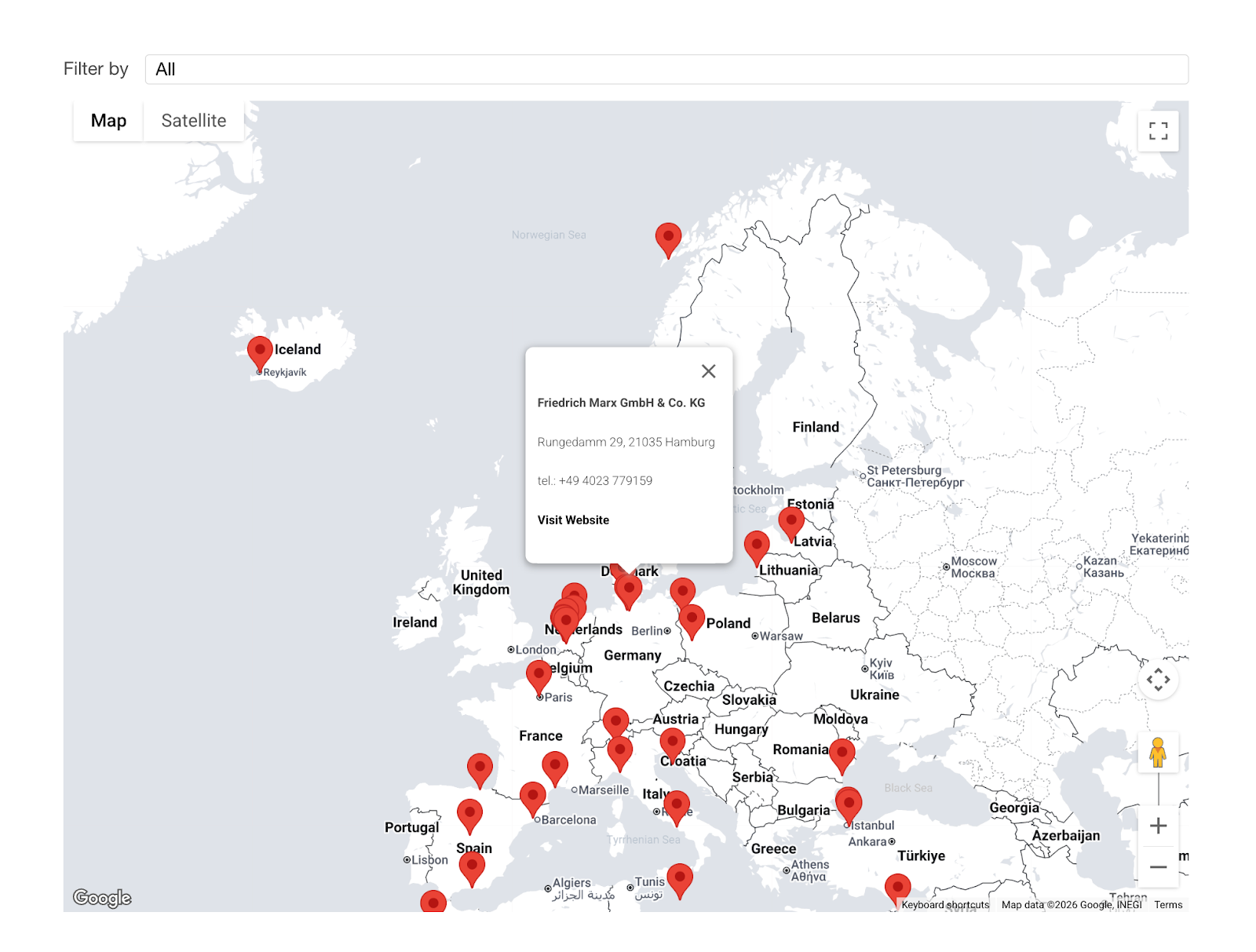
We built a secure portal where dealers and distributors update their own information directly. Changes go live immediately, and the right people get notified. No email chains, no lag between what's true and what a prospect sees.
This solution has eliminated email-based updates and cut content management time by over 30%, resulting in efficient, end-to-end workflows across all Yanmar Europe online platforms. A prospect looking for their nearest dealer or sales rep now gets accurate information rather than a dead end.
Both divisions also received a geographically mapped locator for dealers, sales reps, and stores, so visitors can find the right local contact without calling headquarters first.
Filterable Product Search So Buyers Find the Right Spec Without Calling Anyone
Yanmar Marine International’s product range is wide. The old experience made it hard to navigate, reliant on PDFs that were often out of date and invisible to search engines.
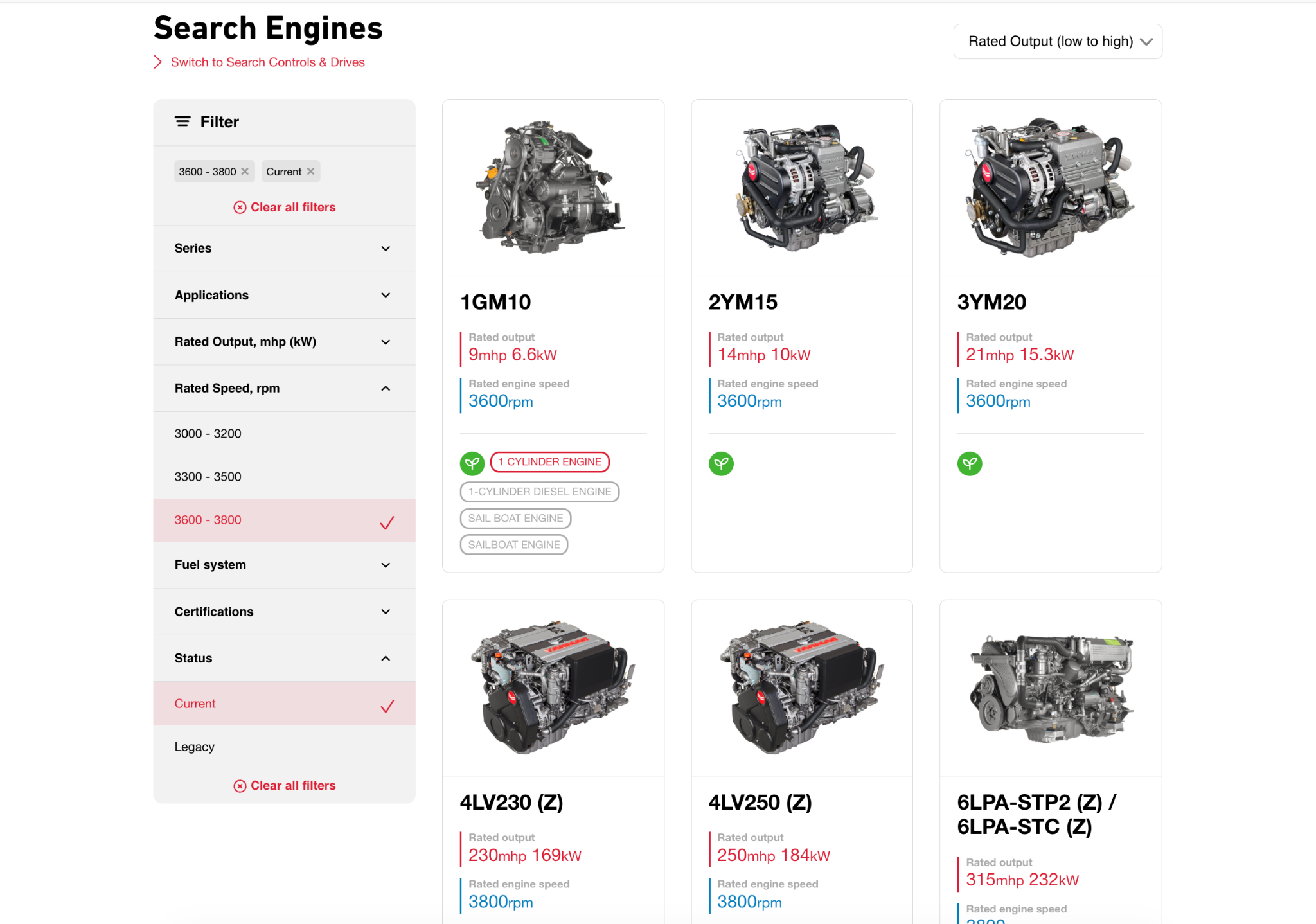
We rebuilt the catalog so buyers can filter by application, specification, or technical parameter and reach the right product in a few clicks. Product information moved off static files and onto the page, always current, accessible on any device, and visible to both search engines and the AI tools buyers increasingly use to shortlist suppliers before they ever contact a sales team.
A prospect can now self-qualify against Yanmar Marine International’s product range without needing to call anyone, and more of them get far enough along to actually reach out.
A Multilingual Website That Works the Same Way in Every Market
Both Yanmar Marine International and Yanmar Europe websites went through a full redesign: clearer structure, better usability across devices, and multilingual capability built into the platform from the start.
Visitors switch languages without losing context. Content stays consistent across markets without separate microsites slowly going off-brand.
Marketing Automation and Analytics So the Sales Team Knows What to Follow Up On
The Yanmar Europe platform connects to marketing automation, so visitor behavior — what they look at, what they download, where they stop — feeds into follow-up that the sales team can actually use. Sessions don't just get logged; they generate structured information about what a prospect was interested in.
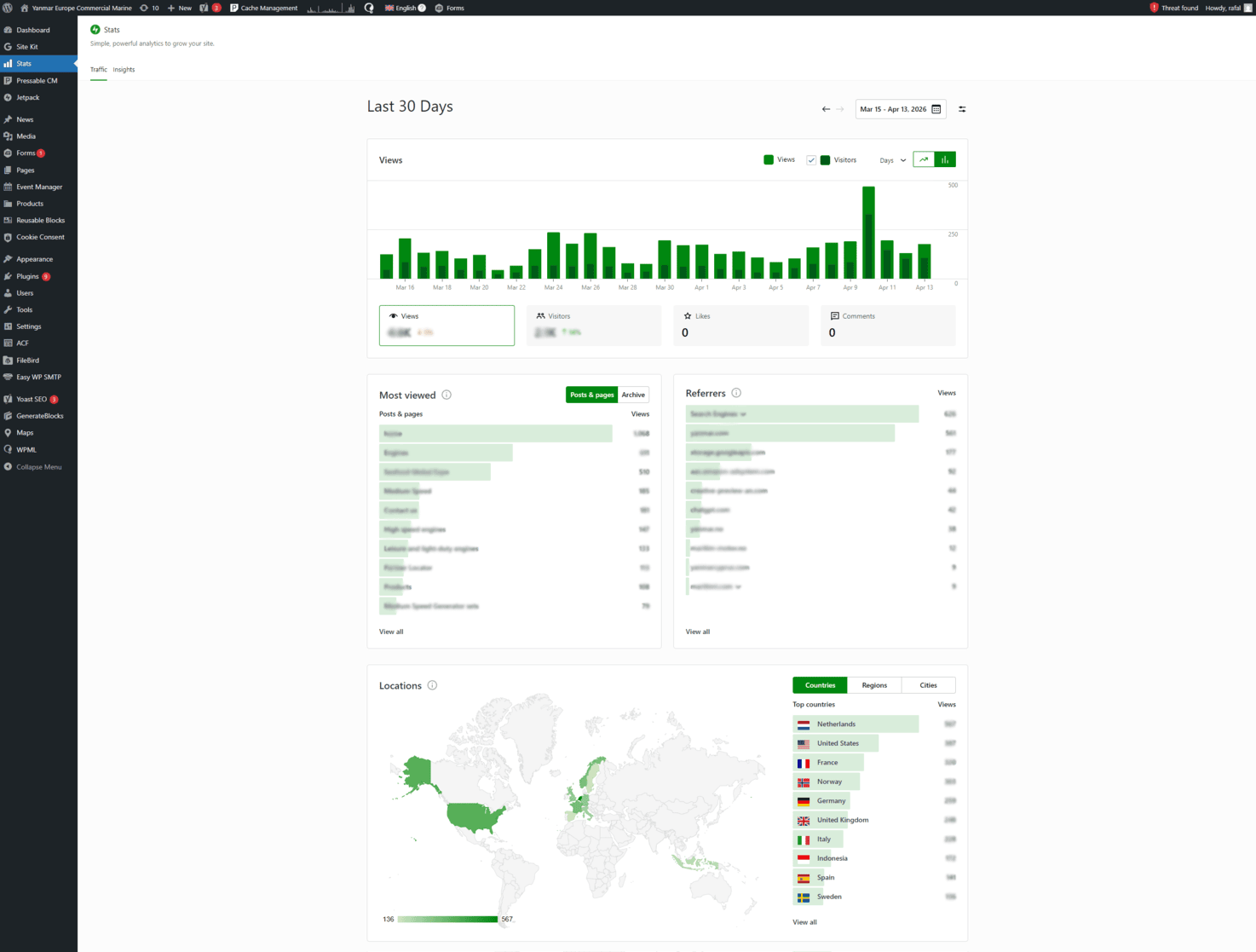
Analytics dashboards give a clear picture of what's working, where prospects drop off, and which products are drawing real interest. Improvements get prioritized based on data, not gut feeling.
Accessibility updates and consent management brought the platform into compliance across European markets, reducing legal exposure and providing visitors with clarity about how their data is handled.
Yanmar Marine International Results: 2024 vs 2025
The following results relate specifically to Yanmar Marine International (yanmar.com/marine), measured December 2024 vs December 2025.
One metric dipped: engaged sessions per active user, down 6.1%. With more visitors, many of them arriving for the first time, a larger, newer audience will pull the per-user average down. Session quality held while the platform absorbed a significant traffic increase, which is the more meaningful number.
Is Your Website Equipped to Support Growth Across International Markets?
If you want to know which gaps are costing you the most, let's talk.
Custom software & digital transformation for manufacturers
FAQ
How do I manage a dealer or distributor network across multiple countries?
Email-based updates don't scale. A self-service portal where dealers update their own information, with automatic notifications when something changes, keeps the network current without the admin overhead and ensures prospects reach a real contact, not someone who left two years ago.
How should a B2B manufacturer's website handle multiple languages?
Multilingual support needs to be part of the platform architecture from the start, not added later. When it's retrofitted, you get inconsistent translations and regional content that slowly drifts from the main brand. Visitors switching languages should stay in context, and content should be manageable from one place.
What website features do B2B buyers actually use?
Filterable product search, current datasheets accessible without downloading a PDF, and a reliable way to find the right local contact. If the site makes any of that hard, buyers leave before your sales team is ever in the picture.
How do I know if my manufacturer's website is hurting sales?
The signs are usually quiet: a support line fielding questions the website should answer, poorly qualified inquiries reaching the sales team, or dealer contacts generating complaints because the details are wrong. If your analytics can't tell you where prospects drop off, that's usually the first thing worth fixing.
About the author