


AI in manufacturing refers to the use of machine learning, computer vision, predictive models, and related technologies to improve operational performance in areas such as maintenance, quality, planning, and process optimisation.

There's a version of the AI in manufacturing conversation that's mostly future-tense — autonomous factories, self-optimising supply chains, everything transformed. That version isn't useful if you're trying to make actual decisions about where to invest.
The manufacturers getting real value from AI are not starting with a vague ambition to “use AI.” They are starting with a specific operational problem, the data needed to address it, and a realistic plan for implementation..
What AI Is Actually Being Used For in Factories Today
The grounded version: AI for manufacturing does specific things well in specific conditions. The manufacturers getting real value started with a concrete operational problem, had the data to support the work, and were honest about what the technology could and couldn't deliver.
Predictive maintenance
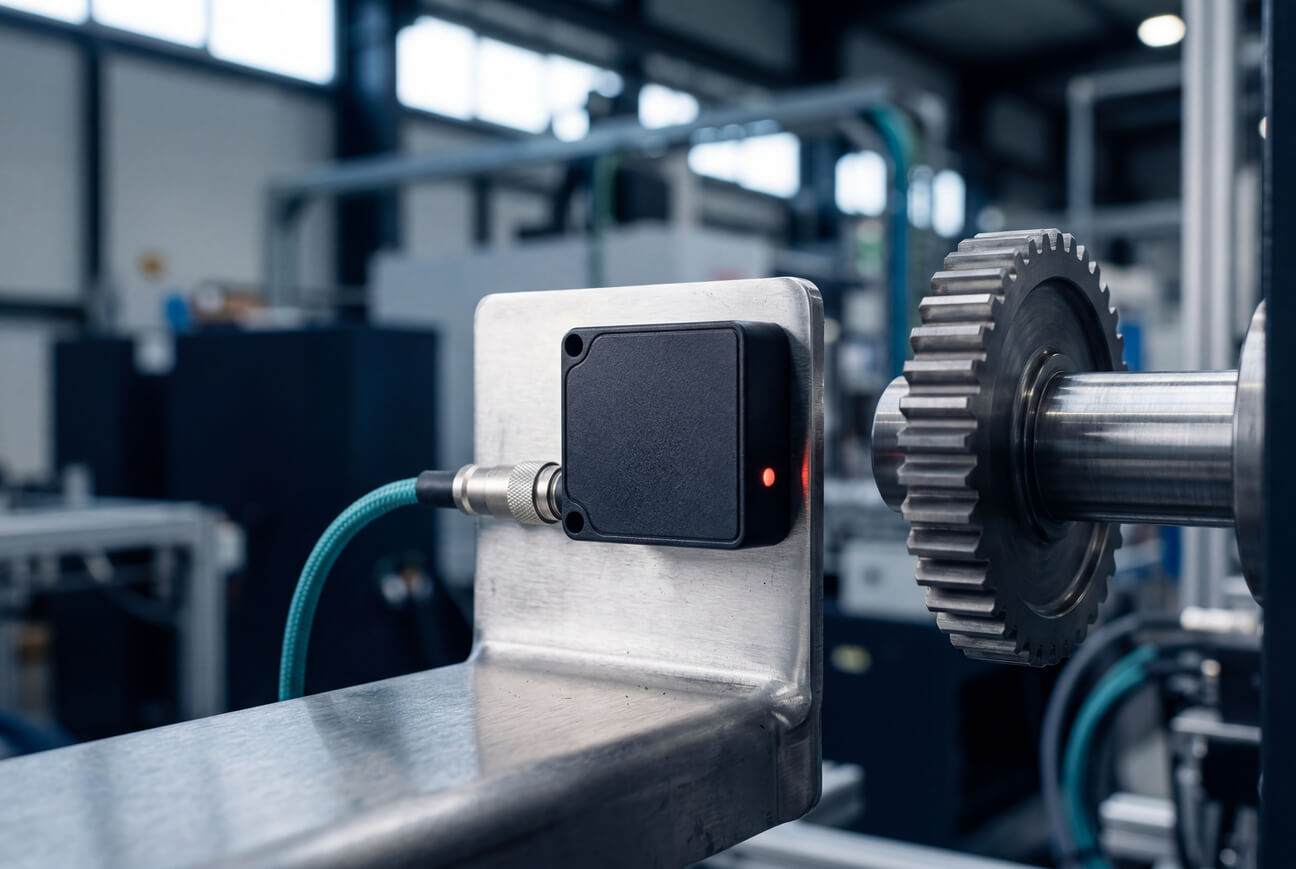
Equipment failure is expensive. Unplanned downtime disrupts production schedules, delays orders, and typically costs more than the maintenance that would have prevented it. Machine learning models trained on continuous sensor data — vibration, temperature, current draw — detect early signs of degradation before they become failure. The result: maintenance happens when data says it's needed, not on a conservative fixed schedule.
Visual quality inspection
Computer vision systems trained on images of defective and non-defective products inspect at line speed with consistent sensitivity — 100% coverage, continuously. The more sophisticated AI solutions for manufacturing quality don't just flag pass/fail: they categorise defect types, track rates by production parameter, and feed data back into process control.
Demand forecasting and production planning
Machine learning in manufacturing planning contexts can incorporate a wider range of signals — historical sales, external data, market indicators, distributor order patterns — to improve accuracy in volatile conditions. Better forecasts mean better production planning: less overproduction, fewer stockouts, improved working capital efficiency.
Process optimisation
AI for manufacturing processes identifies parameter combinations that improve yield or reduce cycle time beyond what experience-based optimisation finds. In high-volume production where small yield improvements compound significantly at scale, the financial case is strong.
In broad terms, AI in manufacturing includes planning, quality, maintenance, and decision support across the business — while more execution-heavy use cases sit closer to AI in industrial automation, where models interact more directly with inspection systems, machine behaviour, and production processes.
Where Data Quality Becomes the Real Constraint
The most common reason industrial AI projects don't deliver isn't the technology — it's the data. Models are trained on historical records. If that data is incomplete, inconsistent, or doesn't capture the right variables, no model produces useful predictions.
Sensor gaps, quality records that don't align to production timestamps, information locked in systems without accessible APIs — these are the actual blockers, and they often point to broader data integration problemsrather than isolated AI-readiness issues. Manufacturers who deploy AI most successfully built connected data infrastructure first, not as an AI prerequisite, but because that infrastructure delivers operational value on its own.
Benefits vs. Hype: An Honest Assessment
- Real: consistent performance at scale without fatigue variation; pattern recognition in complex data that outperforms experience-based rules; speed that makes 100% inspection feasible at line speed.
- Overstated: fully autonomous manufacturing in any near-term horizon for most factories; out-of-the-box models that work without customisation on your specific operational data; immediate ROI without an implementation phase.
Well-scoped implementations of AI in manufacturing can deliver measurable value within months — but data collection, model training, validation, and deployment take time. Framing investments with realistic timelines is what sustains them through the implementation phase.
The difference between a promising AI use case and a successful one is usually not the model itself, but the quality of the data, the clarity of the process being improved, and the organisation’s ability to act on the output.
AI Readiness Checklist for Manufacturers
Before investing in AI, manufacturers need to assess whether the operational and data conditions are strong enough for a use case to succeed.
- Reliable, continuous sensor or production data in the area you want to apply AI?
- That data accessible programmatically, or locked in proprietary systems without export?
- A specific outcome to improve — a metric that matters to operations?
- A process owner accountable for the outcome, not just an IT sponsor for the technology?
- Capacity to validate model outputs against operational reality before live deployment?
In practice, manufacturers usually get more value from AI when it is built on top of broader digital transformation in manufacturing rather than treated as a standalone innovation project. For most businesses, that means placing AI initiatives inside a broader digital transformation roadmap for manufacturing rather than treating them as isolated experiments.
At xfive, our AI Transformation practice focuses on applied AI — custom pipelines, predictive analytics, and AI integration built on the data infrastructure manufacturers actually have. → xfive.co/industries/manufacturing-software-development
FAQ
What is AI in manufacturing and how is it used?
AI in manufacturing applies machine learning, computer vision, and related techniques to operational problems — predictive maintenance, quality inspection, demand forecasting, process optimisation. It works on specific problems with defined data inputs and measurable outcomes, not as a general-purpose capability.
What's the biggest challenge of implementing AI for manufacturing?
Data quality and availability. Most manufacturers have sensor gaps, records that don't align cleanly, or information locked in systems without good APIs. Addressing data infrastructure is often the larger part of the project — and it delivers its own value before any model is trained.
Can smaller manufacturers benefit from AI solutions for manufacturing?
Yes, with appropriate scope. The constraint isn't company size — it's data availability and operational specificity. A mid-size manufacturer with good sensor coverage and a well-defined quality problem is a better candidate than a large manufacturer with poor data infrastructure.
About the author